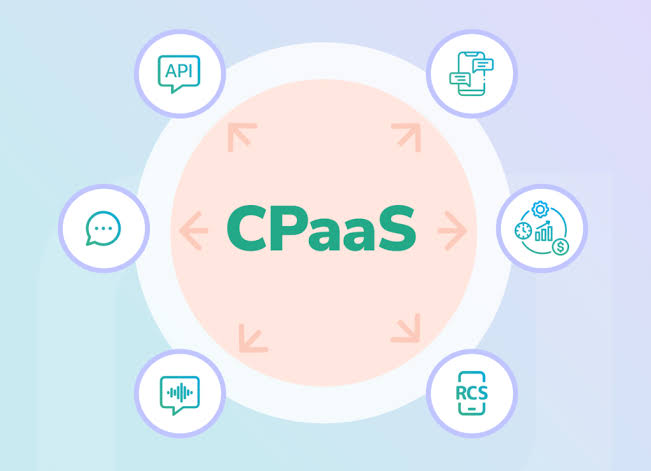
In the noise of political debates, stock market chatter, and cricket hysteria, there is a quiet but powerful revolution underway in India’s digital economy — and it’s happening on your phone, in your WhatsApp messages, and in those little SMS notifications you almost ignore. It’s called Communication Platform as a Service (CPaaS), and if you think that’s just another tech buzzword, think again.
The Indian CPaaS market is not just growing — it’s exploding. From an estimated USD 1.01 billion in 2025 to a projected USD 3.06 billion by 2030, with a CAGR of 24.83%, this sector is shaping the way India’s businesses talk to their customers. And it’s doing so at a pace faster than most policymakers can even pronounce “digital transformation.”
India’s Unique CPaaS Advantage: WhatsApp Nation
Let’s start with the obvious: India is the WhatsApp Republic. With 292 million downloads as of June 2022, India leads the world in WhatsApp adoption. For businesses, this isn’t just a fun fact — it’s a gold mine.
CPaaS platforms are integrating with WhatsApp Business like never before, giving enterprises the power to send automated updates, handle customer queries, and run personalized campaigns at scale. This isn’t limited to tech startups in Bengaluru or unicorns in Gurugram — even a small bakery in Indore can confirm an order and send a festive discount via the same platform you use to send your cousin a Diwali GIF.
5G: The Next Communication Booster
If WhatsApp is the engine, 5G is the turbocharger. According to Ericsson, by 2027, 500 million Indians — 40% of mobile subscribers — will be on 5G networks. What does that mean for CPaaS? Simple: richer, faster, more interactive communication.
We’re talking about video-based customer support that doesn’t lag, AR-enabled product demos, and metaverse-like brand experiences accessible from your phone. The old days of “buffering, please wait” will soon be as outdated as the Nokia ringtone.
Financial Services: CPaaS’ Billion-Dollar Playground
The real heavyweight user of CPaaS in India is not e-commerce or OTT platforms. It’s financial services and digital payments. In FY 2022, India processed a staggering 71 billion digital payment transactions. Every UPI payment, card swipe, and wallet recharge needs a secure, instant communication trail — from OTPs to transaction alerts.
Without CPaaS, your payment confirmation messages would be delayed, your fraud alerts might not arrive in time, and customer service queues would choke. Banks, fintech players, and payment gateways are not just using CPaaS; they are embedding it deep into their operational DNA.
Marketers Going All-In on Digital
Interestingly, CPaaS adoption is also being fuelled by the marketing world. Over 36% of Indian marketers now spend more than 60% of their budgets on digital — a number significantly higher than the APAC average of 25%.
With omnichannel capabilities built into CPaaS — from SMS to WhatsApp to email to push notifications — brands can create consistent, personalized engagement across multiple platforms. And thanks to AI and ML integration, this communication is no longer generic. It’s hyper-personalized, contextual, and often eerily predictive of customer needs.
Strategic Alliances: Big Players Moving In
The market is not just being driven by demand; it’s being reshaped by powerful partnerships.
• Airtel + Meta (December 2022) — A tie-up aimed at building next-gen digital solutions using CPaaS for Indian enterprises. This is like Jio meeting Facebook back in 2020 — but focused on smarter, integrated communication systems.
• Tata Tele Business Services + WhatsApp Business (November 2022) — By embedding WhatsApp Business into its Smartflo cloud suite, Tata is giving SMEs and large corporations alike a ready-made tool for conversational commerce.
When telecom giants, social media behemoths, and traditional IT players join forces, the outcome is rarely small-scale.
Serverless and API-First: The New Normal
CPaaS is also moving toward serverless deployments and API-first architectures. For non-tech folks, this simply means businesses can scale communication tools without maintaining physical servers or complex infrastructure. Want to add secure video chat to your app? There’s an API for that. Need multilingual voice calls? Also an API.
This agility is critical for startups and MSMEs that want enterprise-grade communication without the enterprise-sized bills.
Security: More Than Just OTPs
If you think CPaaS is only about sending messages, you’re missing half the picture. Modern CPaaS providers are building in two-factor authentication, blockchain-based verification, and advanced fraud detection algorithms.
With cyber threats escalating, secure communication is no longer a “nice to have.” For banks, health-tech platforms, and even government services, trust is as important as speed.
From Metaverse to Market Stall: CPaaS Everywhere
The most fascinating frontier? CPaaS + Metaverse. Imagine walking into a virtual shopping mall, picking a product, and instantly connecting with a real-world customer support agent through a seamless API link — all while sipping your chai at home.
Thanks to 5G and enhanced bandwidth, these once-futuristic scenarios are becoming reality. And because CPaaS is inherently scalable, it works as well for a metaverse-powered brand launch as it does for a vegetable seller sending SMS updates to his customers about fresh stock.
The Pay-Per-Use Disruption: MSMEs Take the Lead
Here’s where India’s CPaaS story becomes uniquely Indian: the pay-per-use model.
For the 13.8 million micro-enterprises registered on the Udyam portal, upfront investment in sophisticated communication infrastructure is unrealistic. Pay-as-you-go CPaaS means they only pay for what they use. No massive servers, no dedicated call centers — just plug in the service and start engaging customers.
The impact is tangible:
• ROI on marketing initiatives up to 25% higher
• Engagement costs down by 30% for MSMEs
• Multilingual communication without hiring specialized staff
For a small business owner in Patna or Coimbatore, this is not just cost-saving; it’s business survival and expansion rolled into one.
The Road Ahead: From Niche to Necessity
Today, CPaaS is often discussed in tech forums, business conferences, and startup meetups. But by 2030, it will be as unremarkable — and as indispensable — as electricity. You won’t think about “using CPaaS” any more than you think about “turning on TCP/IP” when you browse the web.
And in that quiet integration lies its true power. India’s CPaaS growth is not just a market statistic; it’s a reflection of a country rethinking how it connects, transacts, and trusts in the digital age.
In the coming years, as political manifestos promise broadband in every village and corporate boardrooms chase “customer delight,” remember this: the backbone of those promises will not just be data pipes or social media apps — it will be the silent, intelligent infrastructure of CPaaS.
Because in Digital Bharat, communication is no longer just about talking. It’s about connecting instantly, securely, and meaningfully — whether you’re a billion-dollar bank, a local kirana shop, or simply a father sending his daughter a quick “reached safely?” on WhatsApp.
And that, dear reader, is the real conversation worth having.