Agritech company Mayani, Bayan secure philanthropic funding from HSBC for climate-smart coops

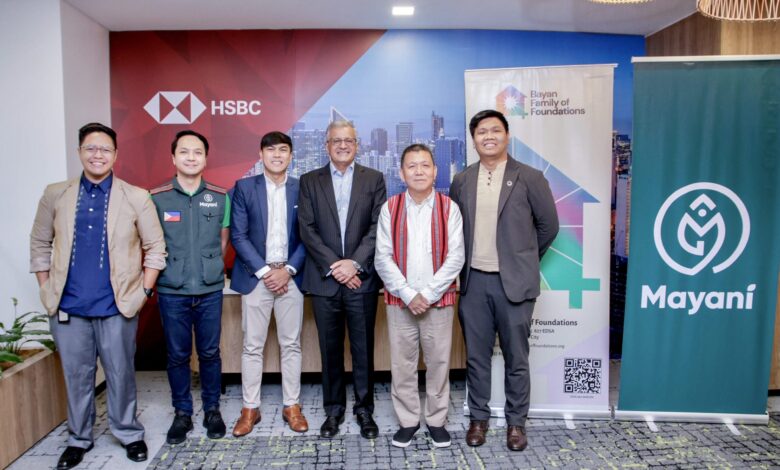
Philippine agritech company Mayani and development sector organization Bayan Family of Foundations collaborated to secure philanthropic funding from HSBC Philippines as part of a multi-sectoral effort to create agricultural cooperative-based models for resilient rural livelihoods. The funding will help smallholder farmers and fishermen scale sustainable food production while adapting to climate change.
According to a statement released by the three on Thursday, farmers and fishermen are facing a double crisis in a country where smallholders produce more than 70% of its food supply: they are the most at risk from climate change, but they are also the least equipped to adapt to it.
According to the United Nations (UN), women smallholders are disproportionately affected by climate hazards because they comprise the majority of the world’s impoverished, are more dependent on natural resources, and have limited access to agricultural credit and training.
The project encourages the growth of smallholder-led cooperatives in clusters that embrace market readiness, embrace digital tools focused on smallholders, use indigenous knowledge, embrace regenerative agricultural practices, and advocate for strong cooperative governance.
Smart greenhouses and precision agriculture systems are examples of on-farm infrastructure upgrades that make up the project’s main capital investment to achieve long-term impact at scale.
Additionally, it supports the development of a manual for cooperative development to guarantee reproducibility.
“We are pleased to partner with Bayan and Mayani to provide philanthropic funding for the climate-smart agriculture capacity building,
“This important partnership will aim to support local farmers and fishermen to adapt climate-resilient practices and strengthen their businesses, while also striving to contribute towards the improvement of food security in the Philippines.” said HSBC Philippines President & Chief Executive Officer Sandeep Uppal.
The action builds investable rural food supply chains and supports UN Sustainable Development Goals 2 (No Hunger), 10 (Reduce Inequalities), and 12 (Climate Action).
A $72 billion funding gap, however, makes it difficult for the Philippines to fulfill its nationally determined contribution, which is the country’s climate action plan.
Mayani thus collaborates with the Co-Axis of Temasek Trust to attract additional climate co-investments following HSBC’s charitable funding.
“There are a thousand ways to tackle any systemic issue,
“History has, however, proven that the power of a community working together towards a common goal can do wonders beyond their expectations,” said Prof. Carlo S. Sagun, President and Chief Executive Officer of Bayan Family of Foundations.
“Filipinos equate this with the value of bayanihan. In the taxonomy of organizations, this is best exemplified by the cooperative, which has the upliftment of its members’ lives as its primary objective through its entrepreneurial pursuits,
“If agricultural cooperatives – numbering in thousands in the Philippines – are effectively mobilized to serve as agents of climate adaptation, social, economic, and even environmental benefits could potentially be delivered to its millions of members,” he added.
The statement claims that this year’s development roadmap by Mayani and Bayan focuses on important, vulnerable food corridors in Luzon and the Visayas.
Smallholders in Muslim Mindanao’s Bangsamoro Autonomous Region, a region in the southern Philippines with abundant natural ecosystems that recently emerged from a precarious state of peace, will be included in the expanded focus in 2026.
The advocates hope that their actions will help to create a multifaceted agricultural imperative that touches on economic recovery, peacebuilding, and food security.
“The sheer gravity and frequency of these climate hazards would eventually require their own nomenclature,
“As they evolve, we see them as known constants in agriculture, and it’s high-time we tackle them head on,” said Ochie San Juan, Co-Founder and Chief Farmer of Mayani.
The leading agritech platform in the Philippines is known for empowering smallholders through lending them access to credit, inputs, and markets.
As part of its ongoing philanthropic efforts, HSBC is looking for solutions that can have an impact and help communities reach their goals for inclusion, resilience, and decarbonization.
They hope to get the most out of the initial funding by collaborating with rural agri-smallholders who are most affected by climate risks.