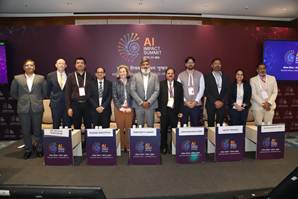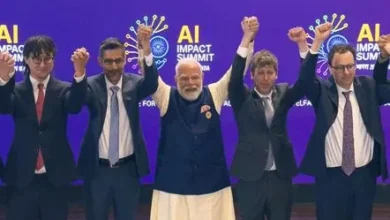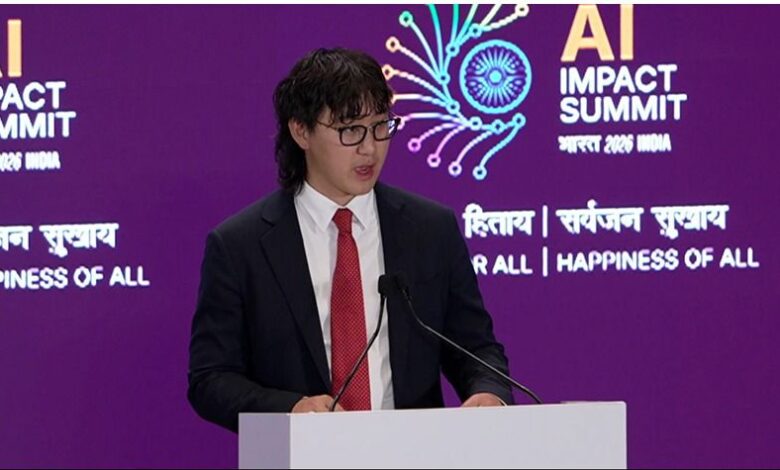
The India AI Impact Summit 2026 was not merely another technology conference where executives spoke about algorithms and applause followed PowerPoint slides. It was a defining moment where some of the world’s most influential corporate leaders admitted a truth many governments are still grappling with – Artificial Intelligence has moved beyond the laboratory. It is now in our hospitals, our grids, our infrastructure, and increasingly, in our pockets.
When Alexander Wang of Meta spoke about “personal superintelligence,” it was clear that AI is no longer about search engines or chatbots. It is about something far more intimate. “Our vision is personal superintelligence, AI that knows you, your goals, your interests, and helps you with whatever you’re focused on doing,” he said.
That statement is both exhilarating and sobering.
Exhilarating because it promises empowerment – a digital assistant that amplifies human capability. Sobering because such intimacy demands trust at a level humanity has never had to negotiate with machines before.
Wang was refreshingly candid: “Trust, transparency and governance must move as fast as the models themselves.”
That line should echo in every Parliament, every regulatory body, and every boardroom in India. Because AI that knows you better than you know yourself is either a tool of empowerment – or of manipulation. There is no neutral middle ground.
If Meta spoke about the personal dimension of AI, Roy Jakobs of Philips brought the conversation back to the most human space of all – healthcare.
In a country like India, where doctors are overburdened and healthcare access remains uneven, AI is not a luxury. It is a lifeline. “AI is not about replacing clinicians; it is about giving time back to them,” Jakobs said. “Time to think, time to connect, time to care.”
That is the right framing. For too long, AI discussions have been hijacked by dystopian fears of job losses. In reality, the most powerful applications of AI are assistive. They enhance judgment, they reduce fatigue, they detect patterns invisible to the human eye.
Jakobs offered a powerful perspective: a decade from now, AI in healthcare will not be remembered for screen optimisations but for the billions of lives improved.
That is the benchmark that matters.
From hospitals to hardware, Martin Schroeter of Kyndryl injected a dose of operational realism into the summit. “The innovation is real. The challenge is readiness.”
Those five words capture India’s current dilemma perfectly.
We celebrate AI breakthroughs. We launch innovation challenges. We applaud hackathons. But the real question is whether our infrastructure, data systems, cybersecurity frameworks, and workforce are prepared to absorb AI at industrial scale.
Schroeter was blunt: AI is not yet industrialised. Embedding it into systems that societies depend on – banking, telecom, public services – requires reliability, governance, and operational maturity.
The future of AI, he argued, will not be decided in research labs. It will be decided by how responsibly it is embedded into the systems that keep civilisation functioning.
That is the difference between innovation theatre and systemic transformation.
Then came Olivier Blum of Schneider Electric, who addressed what may become AI’s most controversial dimension – energy. “AI means more compute, and more compute means more energy.”
It is a reality many prefer to ignore. Data centres are not abstract clouds. They are physical entities consuming vast amounts of electricity. As AI models grow larger and more compute-intensive, the pressure on global energy systems will intensify.
Yet Blum did not sound alarmist. Instead, he pointed to a paradox: AI may be energy-hungry, but it is also the most powerful tool we have ever built to optimise energy systems. “For the first time in our history, we can truly connect the physical and digital worlds,” he said, unlocking 10 to 30 percent efficiency gains.
That number should not be underestimated. In a world battling climate change, efficiency gains at that scale translate into massive carbon reductions.
Taken together, the four leaders delivered a unified message: the next chapter of AI will not be written in code alone. It will be written in hospitals, power grids, digital infrastructure, and everyday life.
India sits at the centre of this transition. With its demographic scale, digital public infrastructure, and growing AI talent pool, the country is not merely a consumer of AI – it is becoming a co-architect of its future.
But the summit also made something clear: breakthrough models are no longer enough. The real test is integration. Responsible scaling. Institutional strengthening.
The measure of AI will not be how intelligent it appears in a demo. It will be how reliably it improves healthcare outcomes, stabilises infrastructure, optimises energy, and empowers individuals – without eroding trust.
That is the transformation now underway.
And if India gets this balance right – innovation with governance, scale with responsibility – it will not just adopt AI.
It will define how the world lives with it.