India stands today at the intersection of technology and destiny. For decades, we accepted polluted air, contaminated groundwater, and climate shocks as the inevitable price of development. That defeatist mindset is now collapsing. Artificial Intelligence is emerging not as a buzzword, but as a decisive instrument in safeguarding India’s environmental future.
AI and the Battle for Breathable Cities
Air pollution remains one of the gravest public health challenges facing India. But instead of endless seminars and symbolic gestures, India’s premier institutions are engineering solutions.
The AIRAWAT Research Foundation of IIT Kanpur has entered into a strategic collaboration with Indian Institute of Technology Delhi to develop AI-driven innovations for sustainable cities. This partnership focuses on real urban stress points – air quality, mobility, energy efficiency, infrastructure planning, waste management, and digital governance.
At the heart of this initiative lies AI-enabled sensor systems for real-time air and bio-aerosol monitoring. These systems are designed to capture pollution data dynamically rather than retrospectively. Instead of waiting for reports that describe yesterday’s crisis, cities can now act on real-time intelligence.
By integrating traffic patterns, industrial emissions, construction activity, and weather data into a unified AI framework, authorities can anticipate pollution spikes and intervene swiftly. This is governance backed by predictive science. It is the difference between reacting to disaster and preventing it.
For millions of urban Indians – especially children, the elderly, and outdoor workers – this shift could be life-changing. AI is becoming a protective shield for public health.
Exposing the Invisible Threat: Arsenic in Groundwater
While polluted air is visible and immediate, arsenic contamination in groundwater is a silent and insidious threat. Along the Ganga basin, millions depend on groundwater sources that may carry dangerous levels of arsenic.
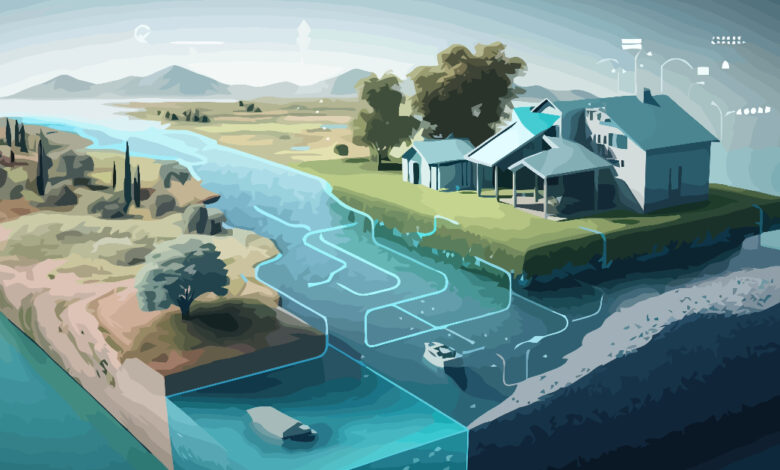
Researchers at Indian Institute of Technology Kharagpur have developed an AI-based predictive model to map arsenic pollution in drinking water. Using advanced machine learning algorithms trained on geological, environmental, and human usage datasets, the model identifies high-risk and low-risk zones with remarkable precision.
The study revealed strong associations between regional arsenic hazards and factors such as surficial aquitard thickness and groundwater-fed irrigation. In practical terms, this means authorities can now identify safer water sources before communities suffer long-term health damage.
This innovation directly strengthens initiatives like the Jal Jeevan Mission by enabling smarter groundwater source selection. Instead of reactive crisis management, AI enables proactive protection.
This is technological intervention at its most humane – saving lives quietly, village by village.
Democratising Climate Intelligence
India’s AI journey is not confined to research laboratories. It is reshaping national climate strategy.
The indigenous Bharat Forecasting System now delivers 6 km resolution weather predictions across the country. These forecasts reach nearly every panchayat, empowering farmers, local administrators, and disaster management authorities with hyper-local climate intelligence.
India has invested significantly in AI infrastructure, including 22 PetaFLOPS of computing capacity. These investments reflect a strategic understanding: climate resilience in the 21st century requires computational strength.
AI systems are optimising renewable energy grids, forecasting agricultural yield patterns, and improving flood and cyclone prediction accuracy. These are not abstract achievements. They are instruments of survival in a climate-vulnerable nation.
India’s net-zero emissions target by 2070 is ambitious. But ambition without technological muscle is rhetoric. AI provides that muscle.
A Leadership Moment for the Global South
India is proving that AI is not the exclusive preserve of wealthy Western nations. It can be harnessed to solve real-world problems in densely populated, resource-constrained environments.
The integration of environmental science, artificial intelligence, and governance reform marks a decisive shift in India’s developmental trajectory. Clean air monitoring, groundwater risk mapping, and climate forecasting are no longer isolated projects – they are pillars of a new environmental architecture.
This is not technological vanity. It is technological sovereignty aligned with national purpose.
India is demonstrating that AI can be a powerful ally in the fight against climate change – particularly for vulnerable communities across the Global South. By combining innovation with institutional collaboration and grassroots implementation, India is building not just smarter cities, but a safer and more sustainable civilization.
The message is unmistakable: India is not waiting for solutions from elsewhere. It is building its own climate intelligence – and in doing so, shaping the future.