In the 1940s, when the first computers filled entire rooms, no one imagined that in a few decades, a small rectangle in our hands would have more power than all of NASA had during the moon landing. Today, we stand at a similar inflection point – not in the age of silicon, but in the age of qubits. The future of technology is not artificial intelligence, blockchain, or robotics alone. It is quantum computing – the invisible force that will power all of them.
Quantum computing is not just another technological evolution; it is a revolution in how we perceive and process reality. It’s not merely faster computation – it’s a different universe of thinking. The difference between classical computing and quantum computing is not about speed; it’s about scale, complexity, and possibility. If classical computing is like a light switch – either on or off, 1 or 0 – then quantum computing is like having every possible state between on and off existing at once.
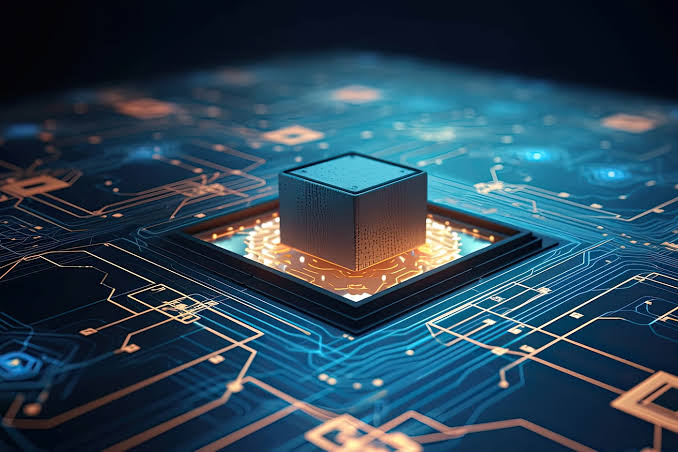
In the simplest sense, quantum computing works on the principles of quantum mechanics – superposition and entanglement. Superposition allows quantum bits, or qubits, to exist in multiple states simultaneously, while entanglement connects them in ways that make their behavior interdependent, even across vast distances. In classical computers, bits are binary. In quantum computers, qubits are multi-dimensional. The consequence? Exponential power.
Imagine a computer that can simulate all possible solutions to a problem simultaneously, instead of trying one at a time. Imagine encryptions so strong that even today’s best supercomputers would take billions of years to crack – yet a quantum computer could do it in seconds. Imagine drug discovery, climate modeling, logistics optimisation, and financial simulations happening in real time. That’s not science fiction. That’s the next technological renaissance.
When quantum computing becomes mainstream, every power structure in technology will change. The United States, China, Europe, and India are all racing to dominate the quantum frontier. Whoever controls quantum computing will control the next century – not militarily, but informationally. Data is today’s oil; quantum computation is tomorrow’s refinery.
Google made headlines in 2019 when it claimed “quantum supremacy” – performing a calculation in 200 seconds that would take the world’s fastest supercomputer 10,000 years. IBM countered that claim, arguing it wasn’t entirely fair. But that moment marked the beginning of a new arms race — not with nuclear bombs, but with quantum chips. Since then, the race has only accelerated.
China has already invested billions in quantum research, setting up the world’s largest quantum research center in Hefei. The U.S. has woven quantum R&D into its national security agenda. Europe has launched the €1 billion Quantum Flagship initiative. And India, too, has stepped onto the stage with the National Quantum Mission, allocating ₹6,000 crore to develop quantum technologies over the next eight years.
This is not a race for technological bragging rights. It is about who writes the rules of the future – the protocols of cybersecurity, the architecture of communication, and the boundaries of computation.
Today, AI is powerful but limited by the speed and capacity of classical computers. Training large language models, for example, consumes enormous energy and time. Quantum computing could change that dynamic completely. A quantum processor could train an AI model not in weeks, but in minutes. Imagine a machine that doesn’t just learn faster, but learns differently – not linearly, but multidimensionally.
Quantum AI could make today’s algorithms look primitive. Instead of deterministic outputs, AI could analyse infinite probabilities – leading to breakthroughs in decision-making, medical diagnosis, and real-time adaptive systems. In other words, quantum computing is the missing neuron in the brain of artificial intelligence.
Every technology that empowers can also endanger. Quantum computing will make today’s encryption systems obsolete. All the digital locks that secure your bank accounts, emails, and military secrets are based on mathematical problems that are hard to solve – for classical computers. Quantum computers, however, can solve them effortlessly using algorithms like Shor’s and Grover’s.
That means one rogue nation or hacker with access to quantum power could decrypt entire data systems in minutes. The very architecture of internet security will need rebuilding. Quantum encryption – which uses quantum keys that change if intercepted – may become the new standard. But until that happens, we are standing on the edge of a digital precipice.
For India, quantum computing is not just a technological opportunity – it’s a strategic necessity. We missed the semiconductor revolution and arrived late to the AI race, but quantum computing gives us a chance to lead rather than follow.
Our scientific base – from IISc to IITs, from DRDO to ISRO – already has the intellectual infrastructure. What we need now is vision and investment. The National Quantum Mission aims to create four “thematic hubs” in quantum communication, computing, sensing, and materials. That’s a start, but we must go beyond bureaucratic ambition.
Quantum research cannot thrive in silos. It requires the collaboration of physicists, engineers, computer scientists, and philosophers. Yes, philosophers – because quantum computing is not just a science of hardware; it’s a science of understanding reality itself.
India must invest not only in labs but in imagination. Our students should be learning quantum principles before they learn coding languages. Our startups should be building quantum simulators. Our government should incentivize industry partnerships in quantum R&D, not with red tape, but with red carpets.
If we can build digital public infrastructure that astonished the world – from Aadhaar to UPI – we can also build a Quantum India Stack that powers the next generation of innovation.
Quantum computing also raises a profound philosophical dilemma. When machines can calculate infinite probabilities at once, what happens to human intuition? When decisions are made by processing every possible outcome, what becomes of choice, risk, and creativity?
We must remember that technology is a tool, not a destiny. The more powerful our tools become, the more disciplined our ethics must be. Quantum computing can solve diseases, but it can also weaponise data. It can enhance intelligence, but it can also erase privacy. The line between creation and destruction, as always, will be human intent.
In the next two decades, quantum computing will not just transform technology – it will transform how we understand truth itself. Reality, as quantum mechanics tells us, is not fixed. It exists in probabilities until observed. In a sense, quantum computing mirrors life itself – full of possibilities, collapsing into outcomes only when we act.
The future of technology is quantum because the future of humanity is complexity. Our challenges – climate change, health crises, social inequalities – cannot be solved by linear thinking. They require systems that see the world in entangled patterns, not isolated points.
Quantum computing is not the end of the digital age. It is the beginning of the reality age. The question is – will we be ready to harness it, or will we once again let a handful of powers dictate the code of our collective future?
Because in the quantum world, the smallest particle can change the largest reality. And the smallest nation, if it dares to dream big enough, can lead the next revolution.