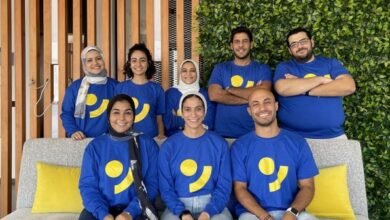
With support of significant regional investors, Rabbit enters Saudi market

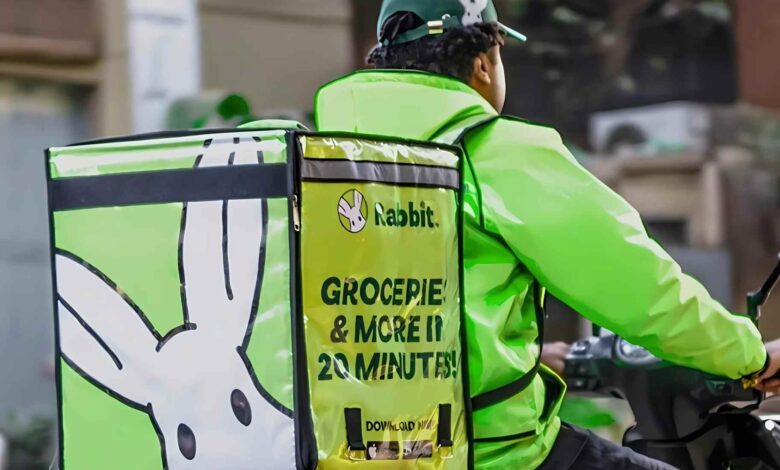
The top tech-driven, hyperlocal e-commerce company, Rabbit, has announced its entry into the Saudi Arabian market with the goal of delivering 20 million items in all of the major cities in the Kingdom by 2026.
In KSA, Rabbit is already operational. The company’s regional headquarters are in Riyadh, which is also home to a rapidly growing Saudi team. The company has successfully launched its operations through a network of fulfillment centers, or “dark stores,” that are positioned strategically throughout the city’s major neighborhoods. The company’s regional headquarters and investments in local talent follow a well-thought-out, realistic strategy for GCC expansion, with Saudi Arabia as the top priority. The company obtained its commercial license from the Kingdom of Saudi Arabia’s Ministry of Investment in 2022.
Rabbit’s competitive advantages of speed, convenience, and dependability make it the perfect market for the Kingdom of Saudi Arabia. With a lower rate of online grocery transactions in the Kingdom of Saudi Arabia (1.3%) compared to the United Arab Emirates (5.3%) and the United States (4.8%), there is a clear opportunity for growth. With a $60 billion total food and grocery market in Saudi Arabia, an e-grocery market worth over $2 billion would result from even a 4% increase in online penetration.
The company’s goals are also in line with the Kingdom’s Vision 2030 plan, which aims to develop the retail industry, boost the economic contributions of SMEs, draw in foreign investment, and advance the digital economy.
By fusing the ease of quick delivery with AI-powered suggestions, Rabbit has amassed a devoted following. Reaching high levels of operational efficiency—a major challenge in the e-grocery industry—is essential to the company’s business model, which promises to deliver groceries, food, cosmetics, and more in as little as 20 minutes. Fast commerce is still a difficult operational problem in the world, and Rabbit is constantly improving the equation that must be balanced between logistics, customer satisfaction, and sustainable unit economics.
Saudi Arabia’s market entry comes after the company’s initial market, Egypt, saw steady, lucrative growth. 1.4 million users have used Rabbit’s app to have over 40 million items delivered in 20 minutes or less during the company’s three and a half years of operation, and revenue has increased by 8.5 times in the last two years.
Ahmad Yousry, Co-Founder and CEO of Rabbit, commented:
“We are delighted to announce Rabbit’s expansion into the Kingdom. We pride ourselves on being a hyperlocal company, bringing our bleeding-edge tech and experience to transform the grocery shopping experience for Saudi households and delivering the best products – especially local favourites – in just 20 minutes. We’re building Rabbit Saudi for Saudis by Saudi hands.”
Rabbit is a “house of brands,” carrying high-end household essentials and focusing on regional client favorites. The company’s strategy will empower KSA heroes in the nationwide roll-out, and more than 60% of suppliers are typically local.
Rabbit’s emphasis on customer satisfaction and solid unit economics allow for long-term growth independent of overzealous advertising and price reductions. Its strong technical foundation enables its success: easy-to-use app interface—a visually appealing display of available inventory; hyper-efficient logistics—moving from point A to point B in the quickest, most economical way; and streamlined warehousing—a fully digitalized supply chain acquiring the right items in the right quantities. Everything is timed in seconds, from “picking” in the warehouse to “final handoff” to the customer.
Along with their current investors, Global Founders Capital, Goodwater Capital, Hub71, Simple Capital, and Foundation Ventures, Rabbit is also happy to have recently added blue-chip investors, including Lorax Capital Partners, Global Ventures, Raed Ventures, and Beltone Venture Capital.