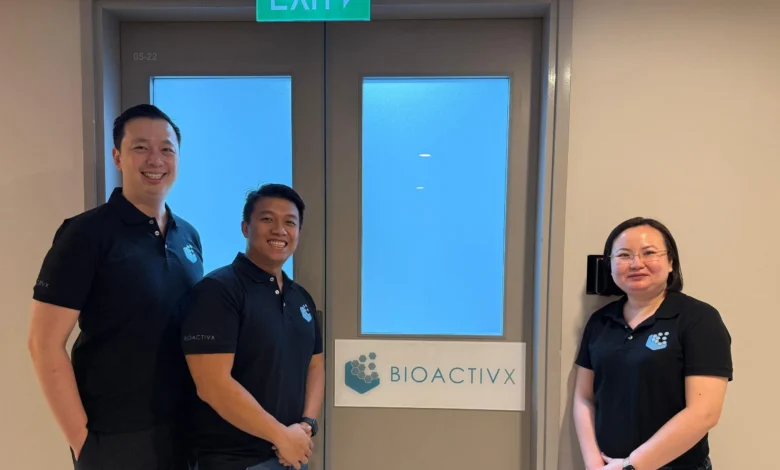
In a pre-Series A funding round, Bioactivx, a deep-tech business based in Singapore that is creating synthetic materials for wound care, raised $3 million.
Bioactivx stated in a statement on Wednesday that the financing, which comes after a $1.43 million seed round in November 2025, brought the company’s total capital to $4.9 million. Along with other new and current investors, Martin Krupp, managing director of the Swiss family office ContInvest, and the venture capital firm Cocoon Capital co-led the most recent round.
Bioactivx, a spin-off of the SingHealth healthcare group and Singapore’s Agency for Science, Technology, and Research (A*STAR), produces Bioactiv Matrix, a completely synthetic skin substitute. Without using materials produced from animals, the product can decrease inflammation and accelerate tissue regeneration.
Many traditional therapies include collagen or skin grafts originating from animals, which may necessitate sterile working conditions and cold-chain storage. According to Bioactivx, its solution could be used outside of hospitals, such as in emergency situations, military settings, and remote or resource-constrained places.
The money would be used by Bioactivx to finance post-market clinical trials, increase manufacturing in Singapore, strengthen its commercial and regulatory teams, and create a larger pipeline that would target inflammatory skin disorders, diabetic ulcers, and chronic wounds.
For regulatory approval, Bioactivx had sent a complete data package to Singapore’s Health Sciences Authority. Prior to regional expansion in 2027, the company planned to start in Singapore, one of its initial markets, in the fourth quarter of 2026.
The roadmap for Bioactivx goes beyond Singapore. In addition to submitting to the Health Sciences Authority, the company intends to apply to the U.S. Food and Drug Administration (FDA) in 2026 and the European Union’s medical device regulations in 2027.
In addition, it intends to begin a Series A financing campaign and conduct a clinical feasibility study in 2026, transition to automated manufacturing and conduct a pivotal clinical trial in 2027, and open its first overseas manufacturing facility and regional headquarters in 2028.