Deep-tech engineering startup Hycosys raises Seed funding from MountTech Growth Fund’s Kavachh

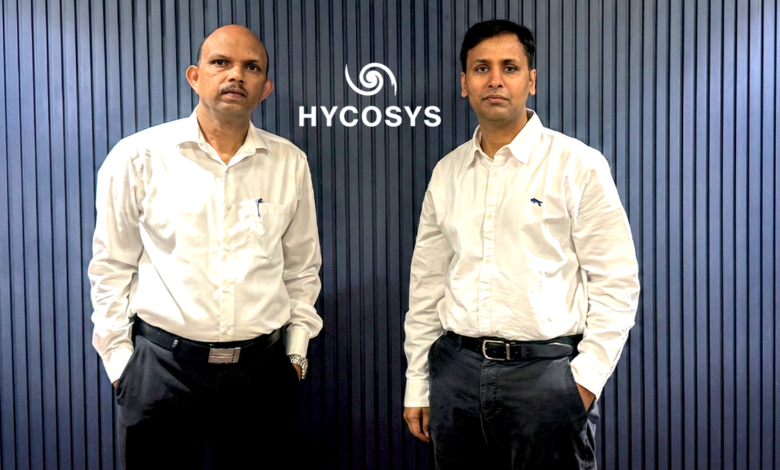
In a seed funding round headed by MountTech Growth Fund-Kavachh, deep-tech engineering startup Hycosys has raised more than $1 million, or roughly Rs 9 crore.
In December 2024, the Bengaluru-based startup had previously raised $88.4K from PointOne Capital in a pre-seed funding round.
According to a press release from Hycosys, the new funding will be used to develop a micro gas turbine (MGT), access cutting-edge testing facilities, bolster the engineering team, and show that a viable clean energy substitute for diesel-based power generators can be achieved by the middle of 2027.
Hycosys, a deep-tech engineering startup founded in 2024 by Tapish Agarwal and Ugandhar Reddy, is creating fuel-flexible, low-emission micro gas turbine systems that are designed from the ground up. With an emphasis on creating hydrogen-ready and clean fuel-flexible micro gas turbines for distributed clean power, mobility, and aerospace applications, the startup is backed by a number of governments, venture capital, and corporate social responsibility initiatives.
India currently has more than 227 GW of installed diesel generator capacity, mostly serving industrial backup and captive power needs, according to industry reports.
With the help of heavy commercial vehicle range extenders, microgrids, and sophisticated propulsion units made to work with big fixed-wing drones and airplanes, Hycosys intends to expand and integrate its MGT. A hydrogen-optimized combustor, a 3D-printed heat recovery unit, and an advanced turbine design are among the startup’s innovations that are presently undergoing testing at IIT-BHU. Compared to current systems, this method makes the MGT up to 30% lighter while greatly increasing efficiency.
The startup wants to develop scalable, domestic turbine technologies that support India’s long-term decarbonization and emission reduction targets, which include obtaining 50% of the country’s energy from non-fossil sources by 2030.