Singapore’s AI humanoid company Doozy Robotics raises Seed funding for global AI expansion

In advance of a planned Series A, Doozy Robotics, a Singapore-based physical artificial intelligence (AI) humanoid company that creates autonomous industrial workforces, announced on Thursday a coordinated global expansion across the US, GCC, and Asia.
According to a statement from the startup, Cocoon Capital is among the investors who have helped the business during a time of significant commercial success.
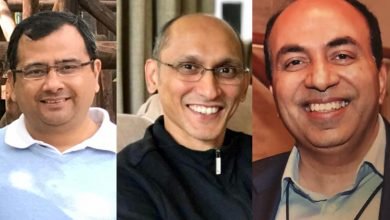
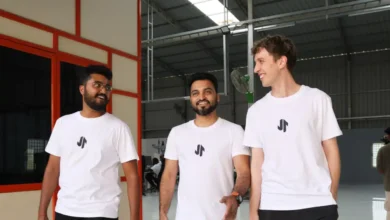
Instead of selling separate machines, Doozy, founded by Suresh Chandrasekar and Ajmal Thahseen, is creating a vertically integrated ecosystem.
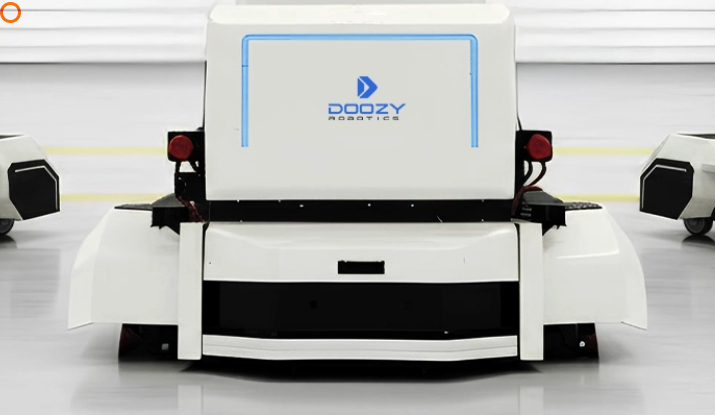
The platform integrates an Industrial Super Humanoid, a fleet of Autonomous Mobile Robots, and Autonomous Forklifts, all of which are managed by Eywa-OS, the company’s proprietary orchestration layer.
Eywa-OS, which was created to operate as a super-intelligent factory manager, controls every aspect of the business, including the interpretation of high-level production goals, the dynamic distribution of robots and humanoids throughout the floor, and the real-time adaptation to disturbances.
The first deployments of the Industrial Super Humanoid will start shortly after its launch in the third quarter of 2026.
A structural, generational labour shortage that now goes well beyond aging economies is the backdrop for the expansion.
Nearly half of American workers are over 45, Gen Z makes up only 8% of the workforce, and labor constraints are expected to have a negative gross domestic product (GDP) impact of over $1 trillion by 2030.
Doozy is marketing itself as the first agentic, scalable industrial workforce designed for this kind of environment.
“The global labor shortage is a structural shift, not a temporary imbalance,
“We are building the Physical AI workforce that will power the next era of manufacturing,” said Suresh Chandrasekar, Chief Executive Officer and Co-founder of Doozy Robotics.
He claimed that the company is enabling facilities to function with intelligence at scale by fusing humanoids, autonomous systems, and Eywa-OS orchestration.