Sweden and UNICEF support African and Asian frontier tech entrepreneurs to reduce disparities in women’s health

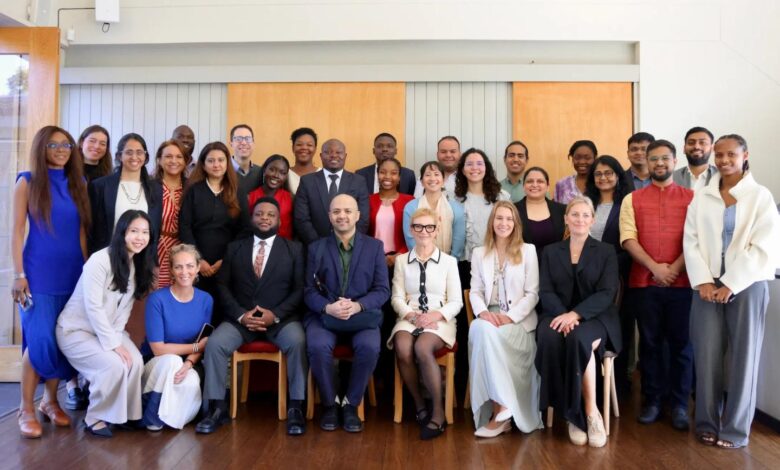
The first cohort of UNICEF Femtech Ventures, a five-year catalytic investment platform that aims to close women’s health gaps through innovation, was launched last week in Pretoria by founders of cutting-edge tech startups closing women’s health and safety gaps across Africa and Asia.
Supported by the Temasek Foundation and the Government of Sweden, UNICEF Femtech Ventures brings together the tech and business community in South Africa, a developed market for addressing sexual and reproductive health and rights.
Access to safe mobility, reliable health information, high-quality care, and digital economic opportunities is still uneven or unattainable for millions of girls and women. The first cohort of UNICEF Femtech Ventures represents a conscious change from identifying equity gaps to supporting the entrepreneurs who are closing them.
In order to address maternal and reproductive care, safe mobility, gender-based violence response, and financial inclusion, this first cohort activates a global network of cutting-edge tech startups in emerging economies using blockchain, data science, and artificial intelligence (AI). Out of more than 1,100 applications from 85 countries—more than half of which were from Africa—each was chosen.
“The most important innovation for women and girls is already being built – by the entrepreneurs closest to the challenge. UNICEF Femtech Ventures backs them with the capital, technical support and partnerships to turn what works locally into access at scale,” said Thomas Davin, global director at the UNICEF Office of Innovation.
The startups will receive up to US$100,000 in equity-free capital and a year of specialized technical support to test, strengthen, and scale their solutions in addition to business mentorship.
The Beninese e-health platform Dotoh, the Kenyan safe mobility service SafeRide by Esheria, the Togolese maternal health chatbot HLlama by Umbaji, and the Tunisian e-health service are the African startups chosen for the inaugural UNICEF Femtech Ventures cohort. Feel by Luna, the social media monitoring tool YouthShield by Kairos in Burkina Faso, and the maternal health chatbot DawaMom by Dawa Health.
Before the second call for applications opens in Q4, UNICEF Femtech Ventures will provide updates on the cohort’s progress in building a portfolio intended to reach millions of women and girls. In order to close access gaps for women and girls in emerging markets, the UNICEF Office of Innovation is looking for more partners to invest in innovative tech startups.