With a $1.5 billion platform to develop energy infrastructure and a new artificial intelligence (AI) project to export American AI technology around the region, the United States is investing more than $2.5 billion in Southeast Asia.
During a special press briefing on the results of the 59th ASEAN Foreign Ministers Meeting (AMM-59), the U.S. Mission to ASEAN disclosed the investment in a statement on Tuesday.
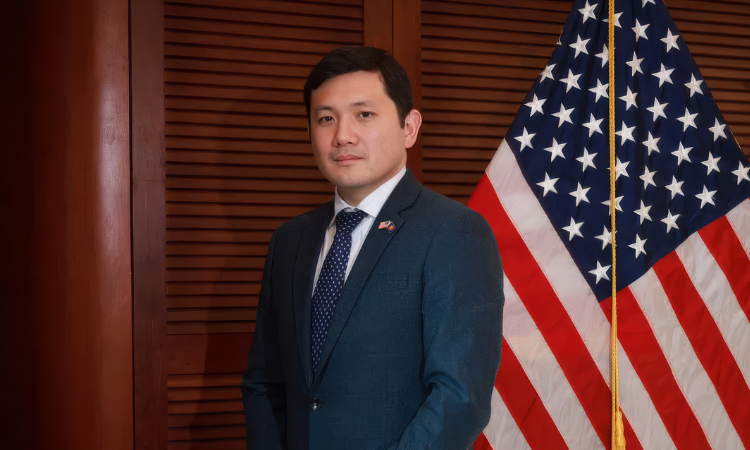
The U.S.-ASEAN AI SPARK program was introduced by U.S. Ambassador to ASEAN Kevin Kim without providing any financial information. The program, which was started under the Trump administration’s “Pax Silica” policy, would encourage American AI exports by giving Southeast Asian countries interested in implementing the U.S. AI stack for public-sector applications financial and technical support.
In addition, the United States is contributing $10 million to update the vital communications technology infrastructure in the Philippines.
In terms of energy technology, a $1.5 billion investment platform to establish infrastructure for energy security throughout the Indo-Pacific is crucial. Kim emphasized that this investment is the biggest single project investment in the U.S. Development Finance Corporation’s history.
Additionally, the U.S. administration is proposing the deployment of U.S. power grid technologies, access to American LNG, and collaboration on small modular nuclear reactors (SMR) for nuclear energy. On the fringes of a NATO gathering, Washington recently inked a memorandum of understanding on compact modular reactors with South Korea and Japan. Kim added that discussions with individual ASEAN states are still underway.
In terms of law enforcement, Kim stated that the US intends to give ASEAN nations $2.5 million to combat money laundering, drug trafficking, cybercrime, and frauds. Kim continued, “Washington has been drafting principles for public-private cooperation against online scams in collaboration with top U.S. tech companies like Meta and Google.”
A further set of promises, categorized under security cooperation, includes $3 million for cyber-related training and a $6.5 million deal that grants the Philippines access to an AI analytics platform for national security decision-making.
Kim framed the investments as mutually beneficial, arguing that growth in the region’s digital economy would inevitably draw in American technology and expertise. “The administration prides itself in output and the ability to deliver quickly,” he said, reiterating “the United States is with ASEAN 100 percent.”