Since 2023, Thailand has drawn over $30.5 billion in electronics investment as multinational producers increase their output of printed circuit boards, components, and semiconductor-related goods in Southeast Asia.
The Thailand Board of Investment’s One Start One Stop Investment Center said on August 26 that around $10.1 billion of the total was allocated to 224 projects using printed circuit boards and electronic components. The agency converted the component total from 331 billion baht and the overall investment figure from 1 trillion baht at a rate of about 32.8 baht to the US dollar.
The Board of Investment attributed the capital influx to manufacturers expanding their capacity for sophisticated semiconductor packaging, AI hardware, and more varied regional supply chains. Instead of money used in a single reporting period, the data include promoted investment that has been amassed over a number of years.
Thailand already has a sizable electronics manufacturing base that includes printed circuit boards, hard drives, appliances, and automobile electronics. The goal of its present program is to expand that base into higher-value industries including manufacturing equipment, chip design, advanced packaging, and power electronics.
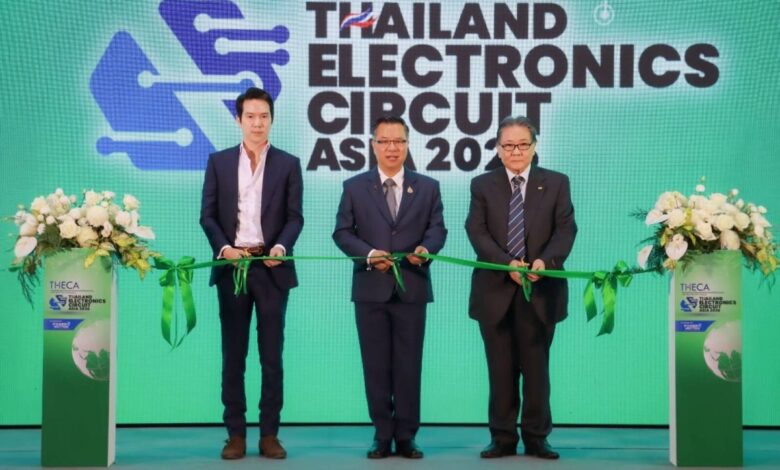
As the Thailand Electronics Circuit Asia 2026 event got underway in Bangkok, the most recent numbers were made public. With talks on AI infrastructure, semiconductors, photonics, packaging, printed circuit boards, and electronics manufacturing services, the three-day event brings together over 300 businesses and over 7,000 delegates.
The size of the event provides a platform for suppliers to find clients and partners, but attendance numbers by themselves do not indicate additional capital expenditures. The announcement’s more significant component, the investment totals, ought to stay at the center of the narrative.
The Board of Investment stated that it is prioritizing indigenous supply chains, labor capabilities, and connections between Thai institutions and overseas firms. High-potential industries, international cooperation, local economic benefits, and preparedness for multinational investment are the four main components of its framework.
The approach is in line with Thailand’s efforts to develop a long-term national plan for sophisticated electronics and semiconductors. The government set phased goals for 2030, 2040, and 2050 in January, including a goal to generate more than 230,000 skilled workers by 2050 and draw in more than 2.5 trillion baht in investment.
Instead of being dedicated projects, those ambitions continue to be policy objectives. Although the agency could not specify how much of the $30.5 billion has gone into building, production, or commercial operations, the most recent investment data show that manufacturing activity is expanding into Thailand.
Individual investments in semiconductor equipment, components, data centers, and supply chains for electric vehicles have previously been authorized by the nation. The amount of value that stays in the Thai economy after factories start running will be determined by connecting those projects with local suppliers and training initiatives.