The only Asian market to fully commit to AI investment is Malaysia: Alibaba Internet

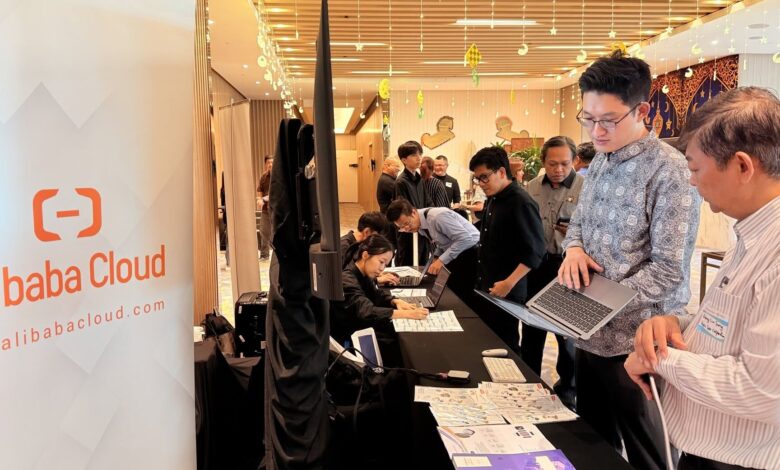
According to a NielsenIQ poll of 1,000 IT decision-makers commissioned by China’s Alibaba Cloud, Malaysia is the only one of eight Asian markets where 100% of respondents want to boost AI investment.
According to a recent study statement from Alibaba Cloud, 97% of Malaysian respondents intend to increase their investments in AI infrastructure (Iaas). According to Alibaba Cloud, over 90% of them want to make more investments in model services (MaaS) and AI platforms (PaaS).
In all eight markets, 75% of respondents think AI has become essential to their business operations, and 99% of respondents say AI is a priority. Just 1% of respondents claim AI is not a priority, whereas almost 90% have begun using AI development tools and models.
Driving innovation and new business opportunities account for 64% of the top strategic goals for AI adoption worldwide, with cost savings and efficiency coming in second at 63%, revenue growth potential being unlocked at 48%, gaining competitive advantage at 45%, and improving customer experience at 43%.
Data analysis and decision-making account for 66% of functional use cases, followed by customer support tools like chatbots (64%), marketing and content creation (58%), product development (including coding) (55%), and HR operations (38%). Improving customer experience is cited as a priority goal by 53% of Malaysians, while 72% identified AI-powered customer care as a significant use case.
Regarding solution preferences, 45% of respondents favor fully integrated cloud and AI offerings from a single provider, while 34% prefer hybrid flexibility with models that can be deployed across multiple clouds and 16% prefer standalone AI models without integrated cloud infrastructure.
Although there is a lot of enthusiasm, 48% of respondents stated that data security and privacy issues are the biggest obstacle to wider use. A lack of internal competence is indicated by 37 percent, and high implementation costs follow at 42 percent. Overall, 31% of respondents mention ethical and regulatory issues; this percentage rises in the governmental sector, financial services, and education.
Additional obstacles include a lack of clear business justifications at 19%, poor solution accessibility at 23%, unclear return on investment at 22%, integration difficulties at 28%, and management opposition at 18%.
Regarding support requirements, 54% want more specialized AI solutions that are suited to industry use cases, 49% want improved talent and skill availability, and 45% want more readily available and reasonably priced options.
Only about half of respondents chose English as their primary language for AI solutions, and businesses in Japan, South Korea, Indonesia, and Thailand cited a lack of high-quality local-language models as a development barrier. Language support also emerged as a crucial factor.
The results support Alibaba Cloud Intelligence Group’s opinion that AI delivered on scalable, secure cloud infrastructure will be the leading technological platform for the next ten years, according to Dr. Feifei Li, Chief Technology Officer and President of International Business. According to the CEO, the emphasis is now on providing actionable outputs rather than creating efficient tokens.